A clear process. A better experience.
I use the Double Diamond to understand the problem, define the right opportunity, explore solutions and deliver accessible experiences. The process adapts to the needs of each project, with iteration throughout.
The Double Diamond
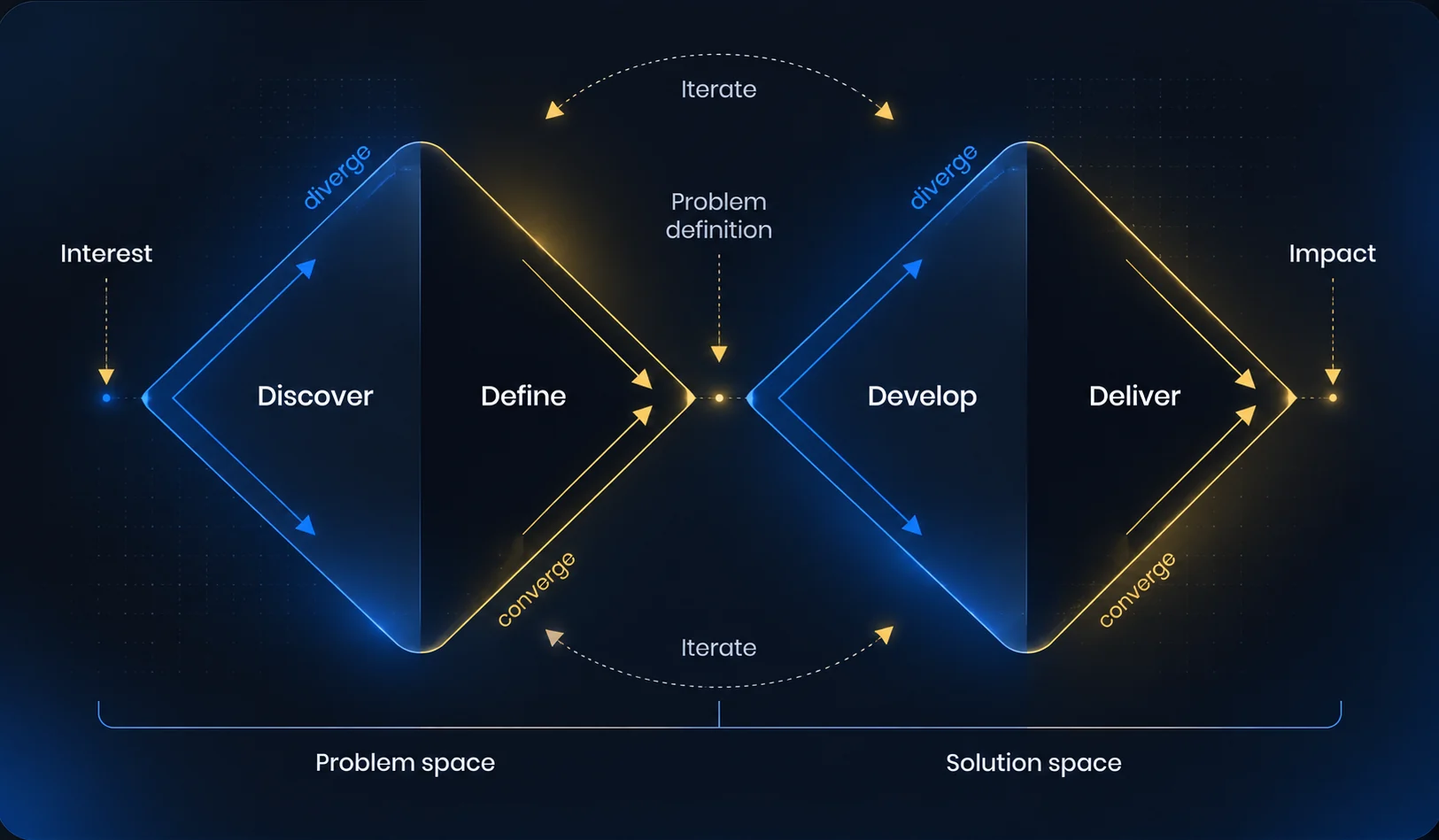
From problem to delivery.
Two diamonds: the first finds the right problem, the second finds the right solution.
-
Diverge · Problem space
DiscoverUnderstand the problem
Research users, business needs and the wider context to uncover pain points and opportunities.
Activities
- User research
- Analytics
- Competitor analysis
In practice
For Shelter’s in-memory giving redesign, I started with a heuristic evaluation of the existing page, analytics on how people reached it and interviews with six people who had given in memory. Those conversations showed that the page had to centre the loved one, not the charity. Read the in-memory giving case study.
-
Converge · Problem space
DefineFocus on what matters
Synthesise findings, align stakeholders and define the problem, priorities and desired outcomes.
Activities
- Journey mapping
- Synthesis
- User flows
- Prioritisation
In practice
For Shelter’s careers site, I mapped the candidate journey end to end, across the careers pages and the applicant tracking system, and found where information went missing between the two. That map set the priorities for a revised content hierarchy and the ATS changes. Read the job-seeker case study.
-
Diverge · Solution space
DevelopExplore and test solutions
Explore ideas, prototype interactions and refine solutions through feedback and testing.
Activities
- Workshops
- Wireframes
- Prototyping
- Usability testing
In practice
For Bike Stamford Brook, a card sort with customers and a competitor review fed a category and filter model for a catalogue of more than 2,000 products. I then tested two navigation options against each other before settling the structure. Read the Bike Stamford Brook case study.
-
Converge · Solution space
DeliverDeliver, learn and improve
Validate designs, collaborate with developers and evaluate the experience to identify future improvements.
Activities
- Accessibility checks
- Design handover
- QA
- Evaluation
In practice
For Shelter’s design system, the download patterns and footer were checked for accessibility from the first draft, documented with the reasoning behind each decision and handed over to the development team. Both are approved and live on the Shelter England and Scotland sites. Read the design system case study.
Iteration runs throughout. I revisit earlier stages whenever new insight appears.
The process bends to the project.
The four stages are a shape, not a script. Two examples of where a project changed the shape.
When research changes the brief
Funeral Print Service asked for an online shop. Discovery research with customers and competitors showed that people arranging a funeral needed clear information and reassurance first, so I challenged the brief and the first release became an information-led MVP instead. Read the Funeral Print Service case study.
When the work ends at the model
Bike Stamford Brook was a research and information architecture engagement. The output was a documented, maintainable category and filter model rather than a built site, because the business chose not to invest in the build at that point. A clear handover still mattered, so the model was written up for whoever picks it up next.
Let’s make something work better.
Available for senior UX and interaction design opportunities.